
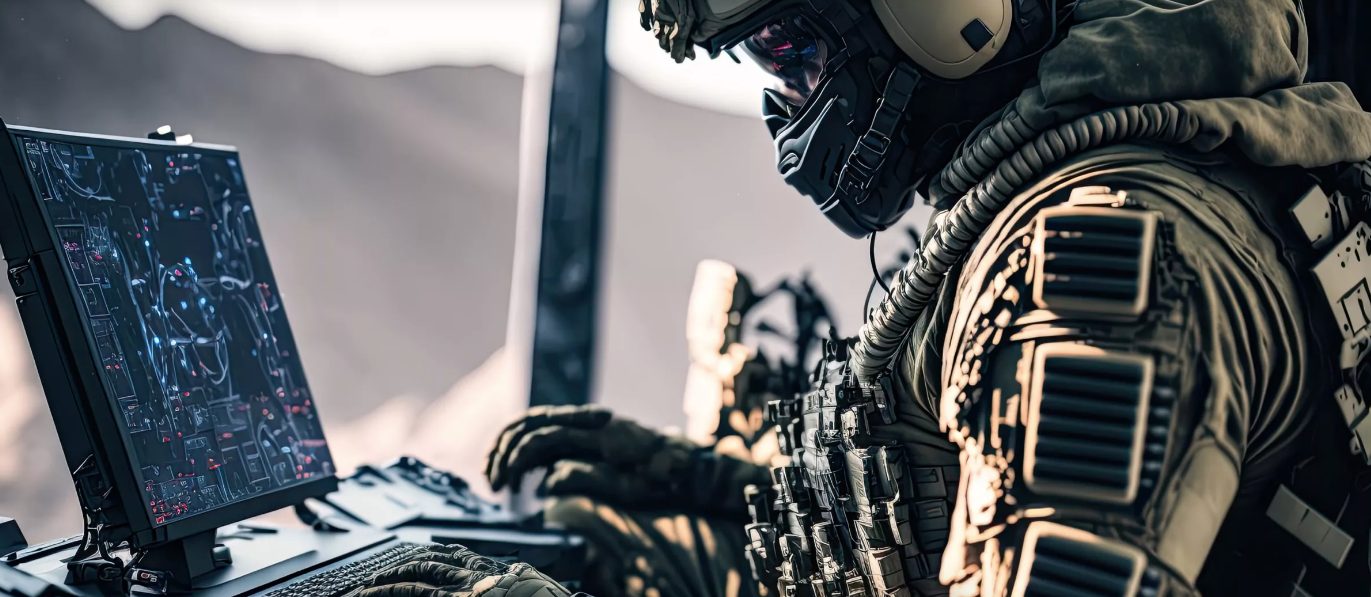
In 2023, the aerospace and defense industry experienced a resurgence in product demand. The aerospace sector, specifically domestic commercial aviation, saw a surpassing of pre-pandemic levels in revenue passenger kilometers in most countries, driven by a notable increase in air travel. This surge in travel led to a heightened demand for new aircraft and aftermarket products and services. In the US defense sector, new geopolitical challenges, coupled with a focus on military modernization, fueled robust demand in 2023, particularly for weapons and next-generation capabilities.
The demand for A&D products and services is anticipated to persist into 2024. On the commercial front, the trajectory of travel is expected to continue its upward path. In the defense segment, the demand for products is projected to keep growing amidst increasing geopolitical instability.
Defense Market Overview
The global defense market achieved a valuation of approximately $474.69 billion in 2021, exhibiting a compound annual growth rate (CAGR) of 4.0% from 2016. Forecasts suggest that the market will experience growth, increasing from $474.69 billion in 2021 to $687.84 billion in 2026, representing a growth rate of 7.7%. Subsequently, it is anticipated to maintain a CAGR of 4.0% from 2026 onwards, reaching a value of $838.03 billion in 2031.
North America, particularly the United States, will continue to play a pivotal role, and any changes in the United States may influence the trends in the aerospace and defense industry. The North American market is anticipated to witness substantial growth during the forecast period, driven by the widespread adoption of advanced technology and the presence of major industry players.
Europe also holds a significant position in the global market, experiencing remarkable growth with a magnificent CAGR during the forecast period of 2022–2030.
Despite intense competition, the global recovery trend and investor optimism are evident. New investments are expected to enter the field, reflecting the overall positive outlook for this sector.
Technological innovation and advancements will enhance product performance, expanding its use in downstream applications. Additionally, consumer behavior analysis and market dynamics, including drivers, restraints, and opportunities, provide essential insights into the defense market.
Ukraine’s Defense Industry: A Catalyst for Economic Growth and International Collaboration

On September 29, 2023, Kyiv hosted the inaugural International Forum of Defense Industries (DFNC1), serving as a convergence point for 252 companies hailing from over 30 countries engaged in producing a comprehensive array of weapons, military equipment, and defense systems. This significant gathering was collaboratively organized by three key ministries: the Ministry of Strategic Industries of Ukraine, the Ministry of Defense of Ukraine, and the Ministry of Foreign Affairs of Ukraine.
Ukraine possesses a robust foundation to establish a formidable defense-industrial complex. Current Ukrainian enterprises are engaged in the production of artillery ammunition, NATO-caliber 155mm artillery systems, and innovative automated systems such as naval drones, long-range UAVs, missiles, and anti-tank systems, effectively deployed on the frontlines. The pace of development in Ukrainian production and technologies continues to rise steadily.
The defense industry is a pivotal component in the overall advancement of the Ukrainian economy. Within the framework of the Forum, Ukraine has entered into 20 agreements and memorandums with international partners, encompassing the manufacturing of drones, repair and production of armored vehicles, and ammunition. Collaboration formats include joint production, technology exchange, and component supply, fostering an equal partnership that strengthens all participating entities.
The localization of production within Ukraine holds the promise of attracting diverse technologies, ideas, and solutions, facilitating the acquisition of weapons tested in genuine combat scenarios.
President of Ukraine Volodymyr Zelenskyy unveiled several new initiatives to fortify defense cooperation during the International Defense Industries Forum.
New Frontiers: Defense Software
Defense software has become a dominant force on the battlefield, driving innovations such as autonomous systems, networked weapons, and cyberweapons. The future of defense relies on software-focused companies that prioritize responsiveness, continuous improvement, and iterative development processes.
The defense software development process adopts the agile principle, ensuring a swift and adaptable response to current situations and tasks. Agile product development not only reduces time-to-market but also minimizes technical risks, ensuring projects remain on schedule and within budget.
Agile development facilitates the testing of intricate designs before physical manufacturing, allowing for the evaluation of performance, manufacturability, and maintainability in the early stages of the design process.
Proven effective in the software industry, agile design methods present an opportunity for the military and defense industry to embrace similar approaches. As these sectors undergo rapid transformations, adopting agile methodologies can lead to success.
Establishing a model-driven collaborative design environment that seamlessly integrates electrical, mechanical, and software development can drive innovation. This approach leverages virtual verification and manufacturing to thoroughly test designs, fostering product advancement.
Benefits of Military and Defense Industry Software Development
Automation in Military Equipment Control
By leveraging Big Data, military operators can reduce the need for human intervention in controlling various types of military equipment. Data streams from sensors equipped on military vehicles, drones, and defense systems can be efficiently managed, providing valuable insights into the battlefield.
Cloud Technologies for the Defense Industry
The defense industry’s reliance on extensive data collection, storage, and analysis necessitates the adoption of cloud technologies. Virtualization and cloud solutions become essential for handling complex Product Lifecycle Management (PLM) systems and other resource-intensive software applications.
Software in Military Equipment Simulation
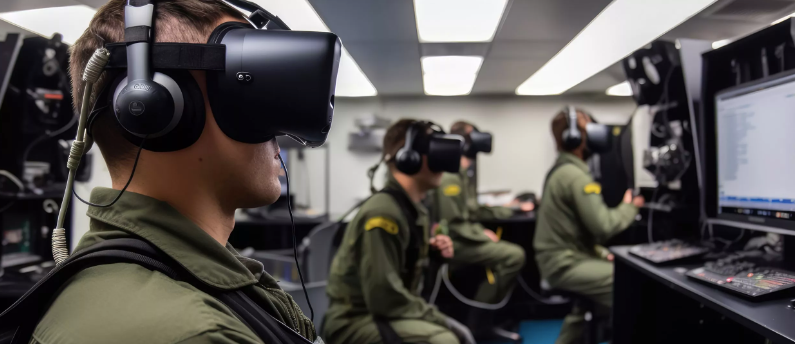
Specialized software expedites the design and simulation of military equipment, reducing the time required for tasks such as project sketching, design, and modeling. This accelerates the overall production process of military equipment.